Choosing an eccentric flaring tool: cone action, clutch release and depth setting
Choose forming controls by function
TL;DR: For repeated installations or trainee use, my buying recommendation is to look for three separately documented features: eccentric cone action, clutch release and a clear tube-positioning provision. Check each on the exact model before buying; use their documented purposes to make a shortlist rather than assuming a guaranteed improvement in speed or finished joints.
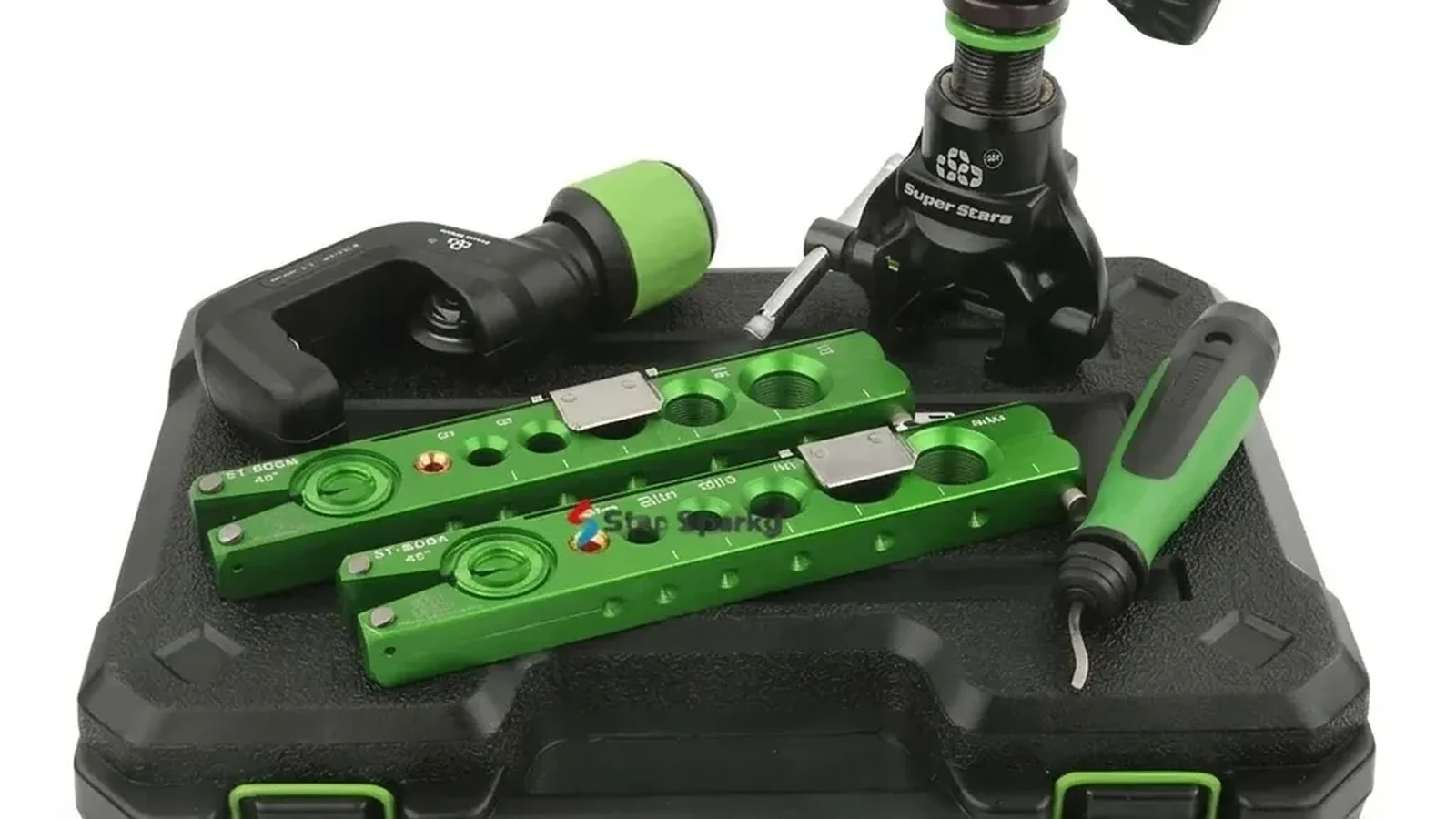
When assessing an eccentric flaring tool clutch, ask three separate questions: how does the cone form the flare, what is the clutch intended to control, and how is tube projection established?
YELLOW JACKET describes the off-centre cone on its 60295 tool as producing a rolling action for uniform flare walls without galling. It separately lists a built-in clutch release to prevent over-torquing. On its Electric/Manual Lightweight Flaring Tool, the manufacturer also lists a built-in slide gauge to help achieve the desired flare sizes. These are model-specific descriptions of different functions, so my recommendation is to assess them separately rather than treat “eccentric” as shorthand for the whole package.
For repeated split-system work, I would shortlist tools whose documentation answers all three questions. For a trainee, I would give particular attention to the documented clutch function and the explanation of tube positioning. That is a purchasing preference based on explicit controls, not a measured finding that a trainee will make fewer errors.
FlariTool’s own technical FAQ describes the FlariTool Pro as having an eccentric, off-centre cone mechanism. That supports considering it as an eccentric-tool option; use the exact model’s documentation to assess the remaining controls before choosing it for your work.
Check cone action, clutch release and tube positioning separately
Use a three-part documentation check to turn a feature list into a buying decision. The following is a proposed assessment method, rather than a tool operating sequence.
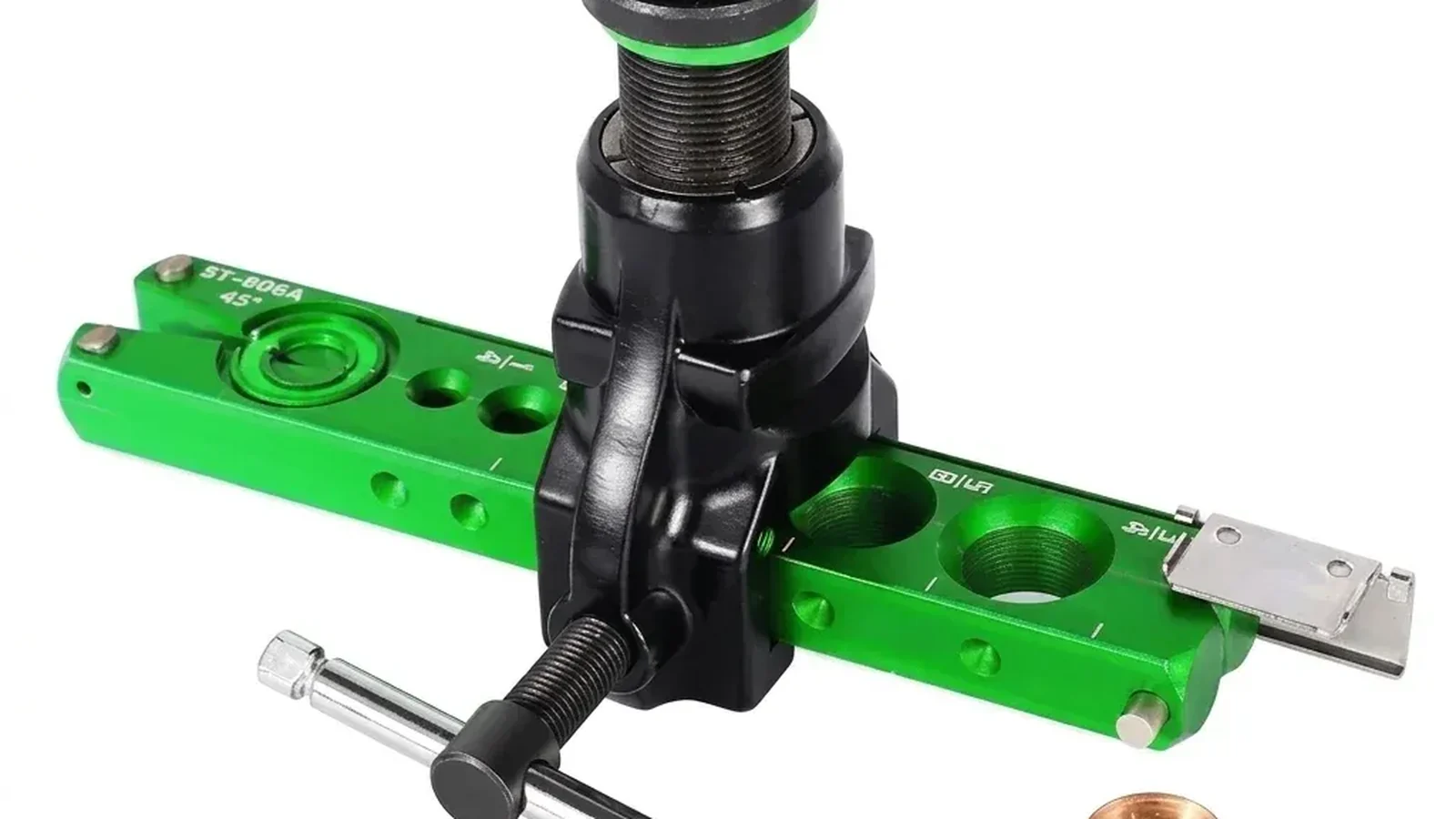
1. Ask what the cone mechanism is documented to do
For the 60295, YELLOW JACKET describes an off-centre hardened steel cone with a 45° flare and a rolling action for uniform flare walls without galling. Treat that as the manufacturer’s description of this model’s forming action.
My recommendation is to record the documented cone mechanism for each candidate, then keep any claims about surface finish or flare quality attributed to their source. A description of rolling action is a useful reason to investigate a tool; it is not a numerical comparison with the conventional tool you already own.
2. Ask what the clutch is documented to control
YELLOW JACKET lists a built-in clutch release to prevent over-torquing on both its 60295 and its Electric/Manual Lightweight Flaring Tool. For a trainee’s shortlist, I would favour an explicitly documented clutch function over an unexplained reference to operator feel.
Before purchasing, ask for the exact model’s instructions and identify how they describe clutch release and completion of forming. Make that explanation part of your selection criteria. Do not infer a universal stopping rule from a product feature list, or treat a clutch description as proof of lower trainee error rates.
3. Ask how tube projection is established
YELLOW JACKET’s 60295 page states that flare size is determined by how much tubing is pushed through the flare block, and tells readers to check the manufacturer’s height requirements for the specific refrigerants. Its separate Electric/Manual Lightweight model lists a built-in slide gauge to help achieve the desired flare sizes.
For your shortlist, record whether the exact tool documents a positioning aid or a specified method of setting projection. Request clarification if the listing only says “easy to use”. Keep this check separate from the clutch question: evidence for a clutch is not evidence for a tube-positioning aid.
Also distinguish positioning from finished-size checking. The 60295 listing says it includes the 60297 Flare Sizing Gauge for checking finished flares. That is a different documented purpose from the built-in slide gauge listed for the Electric/Manual Lightweight tool. Do not transfer the latter feature to the 60295 merely because both listings mention a gauge.
Apply the check to your purchase
For repeated installations, I suggest writing one line per candidate: cone mechanism / clutch function / projection method / supporting document. For trainee use, ask the supervisor to review those same four entries and identify any explanation that remains unclear.
If your existing tool already has a clear documented method that suits your work, use it as the baseline for comparison. Ask which specific control the proposed replacement adds and whether that addition matters to your working or teaching method. This gives you a practical decision without inventing a payback period.
Request the model documentation before you buy
My recommendation is to choose the tool whose documented controls best address your particular purchase concern. For repeated work, give priority to a clear explanation of forming action, clutch function and tube positioning. For trainee use, ask the supervisor to assess whether those explanations are sufficient to support instruction on the exact model.
Send the supplier these questions before committing:
- Which exact model and instructions apply to the tool being supplied?
- What cone mechanism does that document describe?
- What is the clutch intended to control, and where is its use explained?
- How does the model establish tube projection? Is a positioning aid included?
- If a gauge is included, is it for positioning the tube or checking the finished flare?
Use the answers to complete your shortlist. I would defer a candidate if a control essential to my decision remained unclear, rather than fill the gap with an assumption based on another model.
Sources to check against your shortlist
The YELLOW JACKET 60295 product page lists its rolling cone action and clutch release, explains the relationship between tube projection and flare size, and links to model instructions.
The YELLOW JACKET Electric/Manual Lightweight Flaring Tool page separately lists a built-in slide gauge and clutch release, and links to a flaring tool manual. Use it as a documented feature example rather than assuming the same equipment is included with other models.
The FlariTool website describes the FlariTool Pro as eccentric. If that is your candidate, request the exact model documentation to complete the same assessment; the cone description alone should not decide the purchase.
For an upgrade, state the reason in concrete terms: “I want a documented clutch function” or “I want a clearly explained tube-positioning provision.” Keep the buying decision tied to that need. Claims of faster installations, fewer leaks or a financial payback should not substitute for the feature evidence you can actually check.